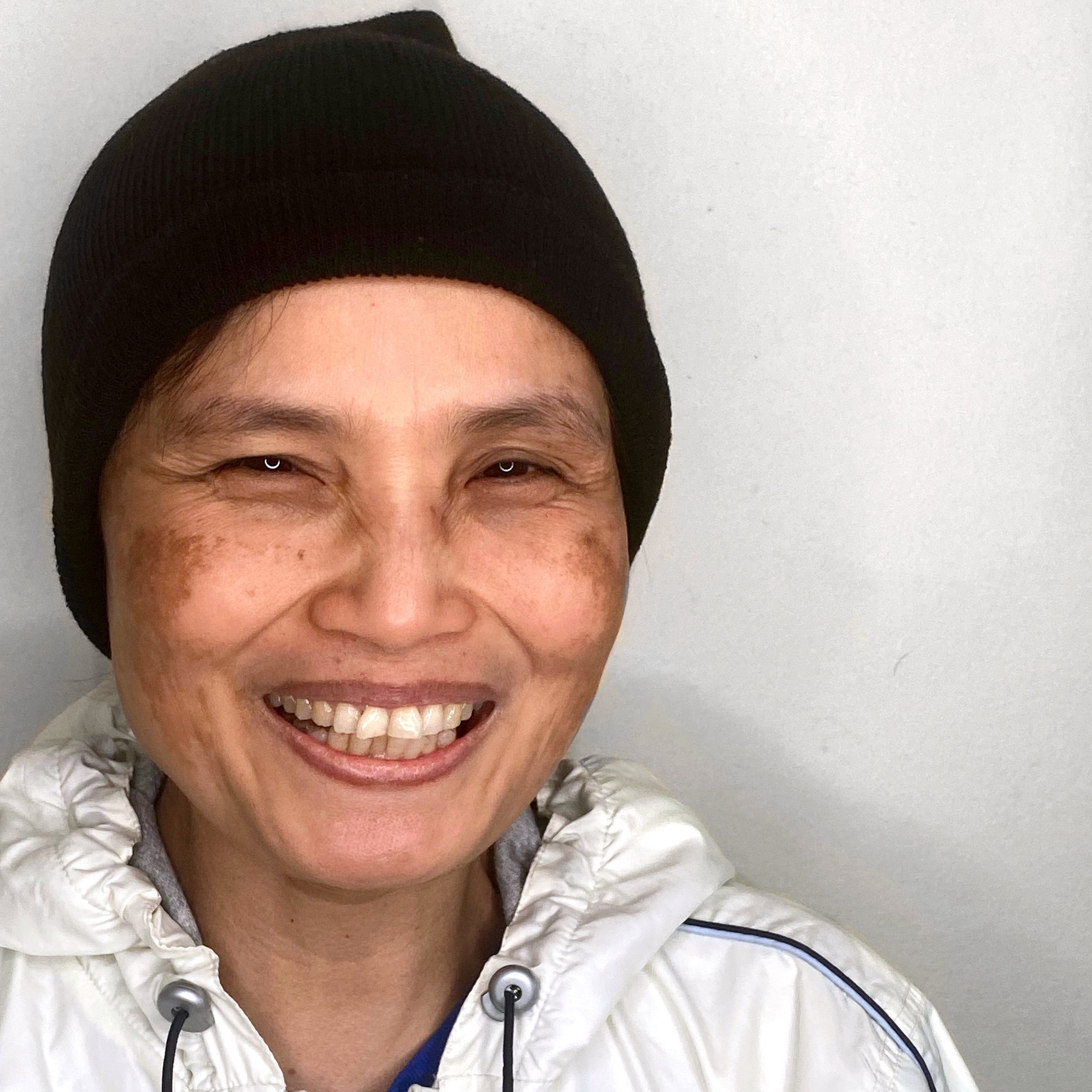
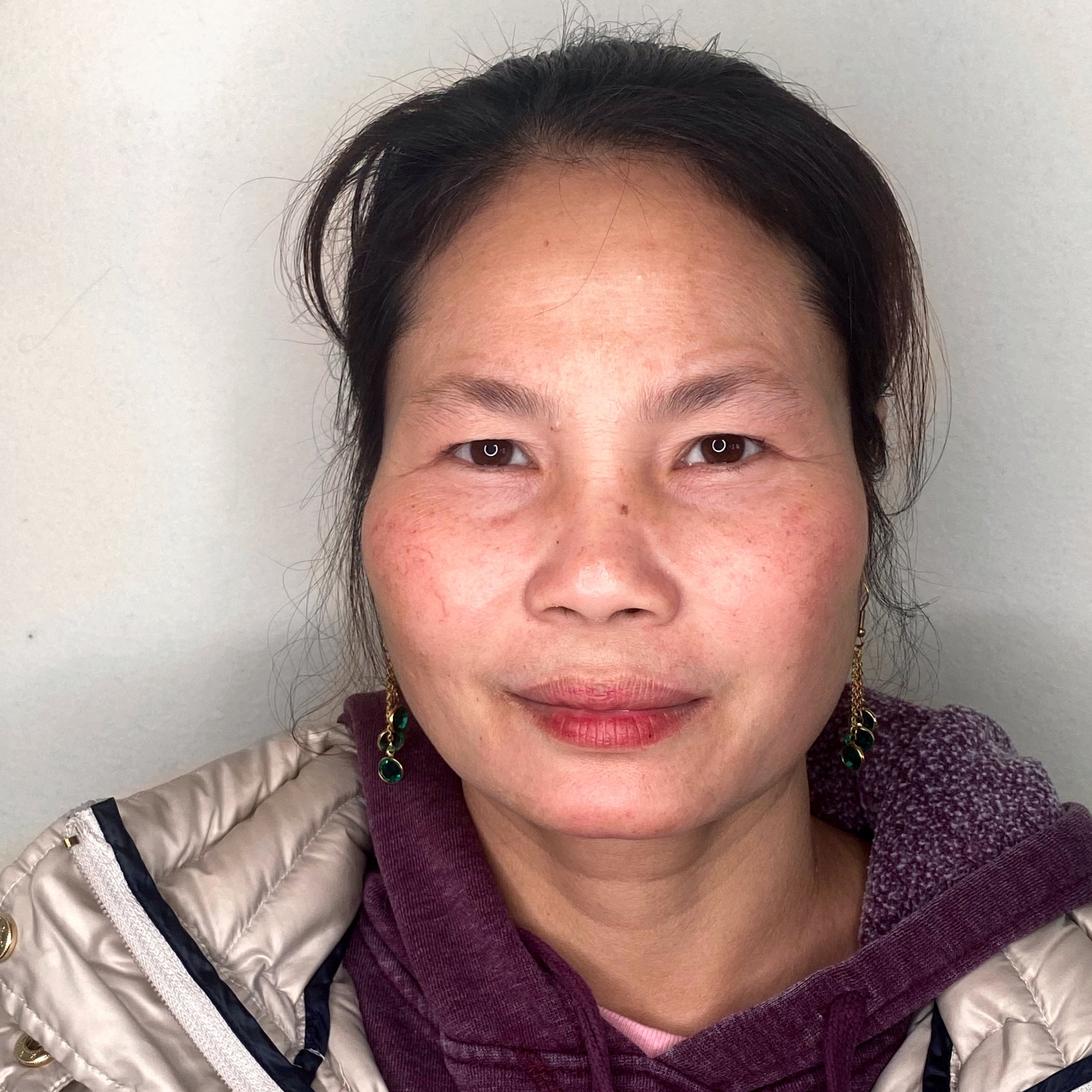
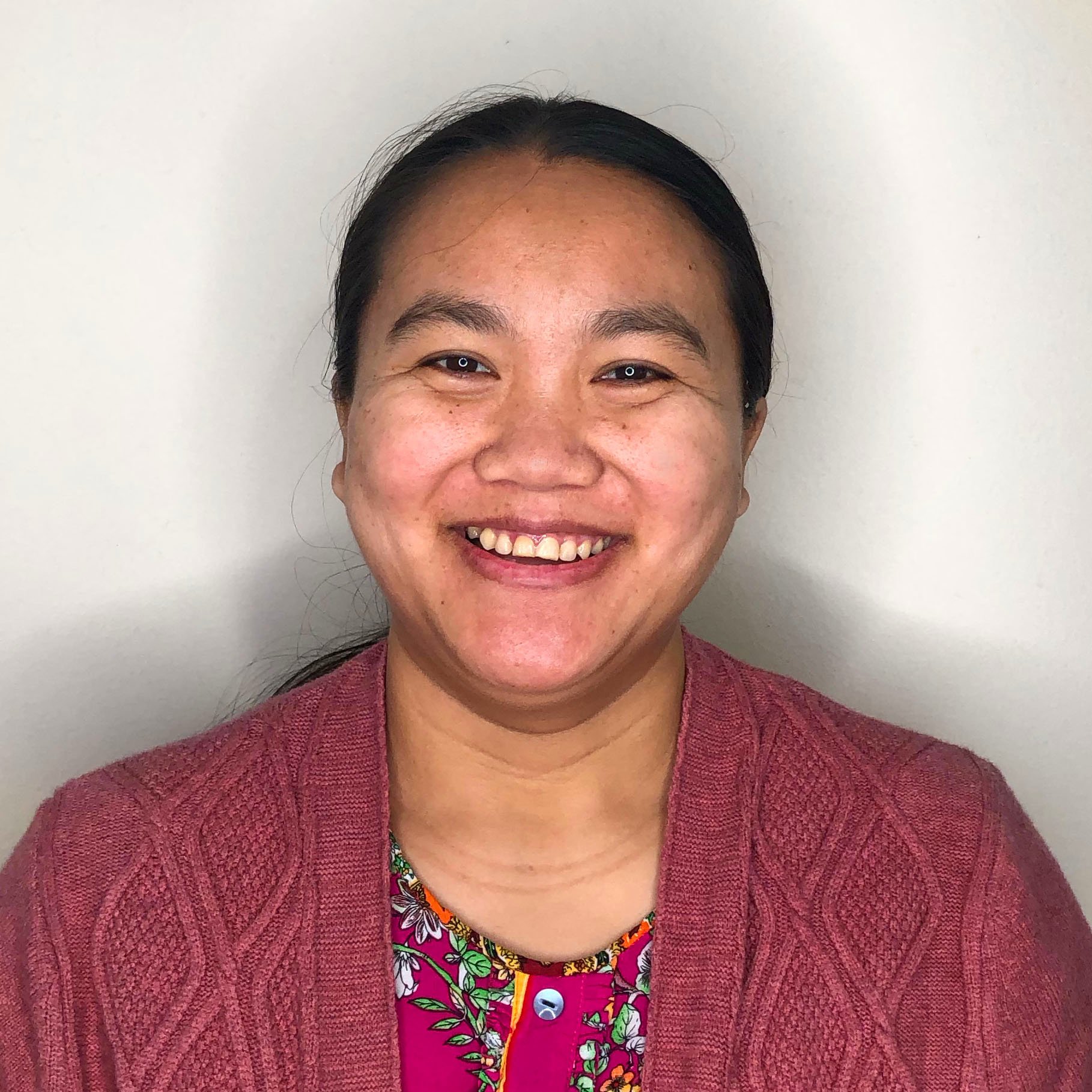
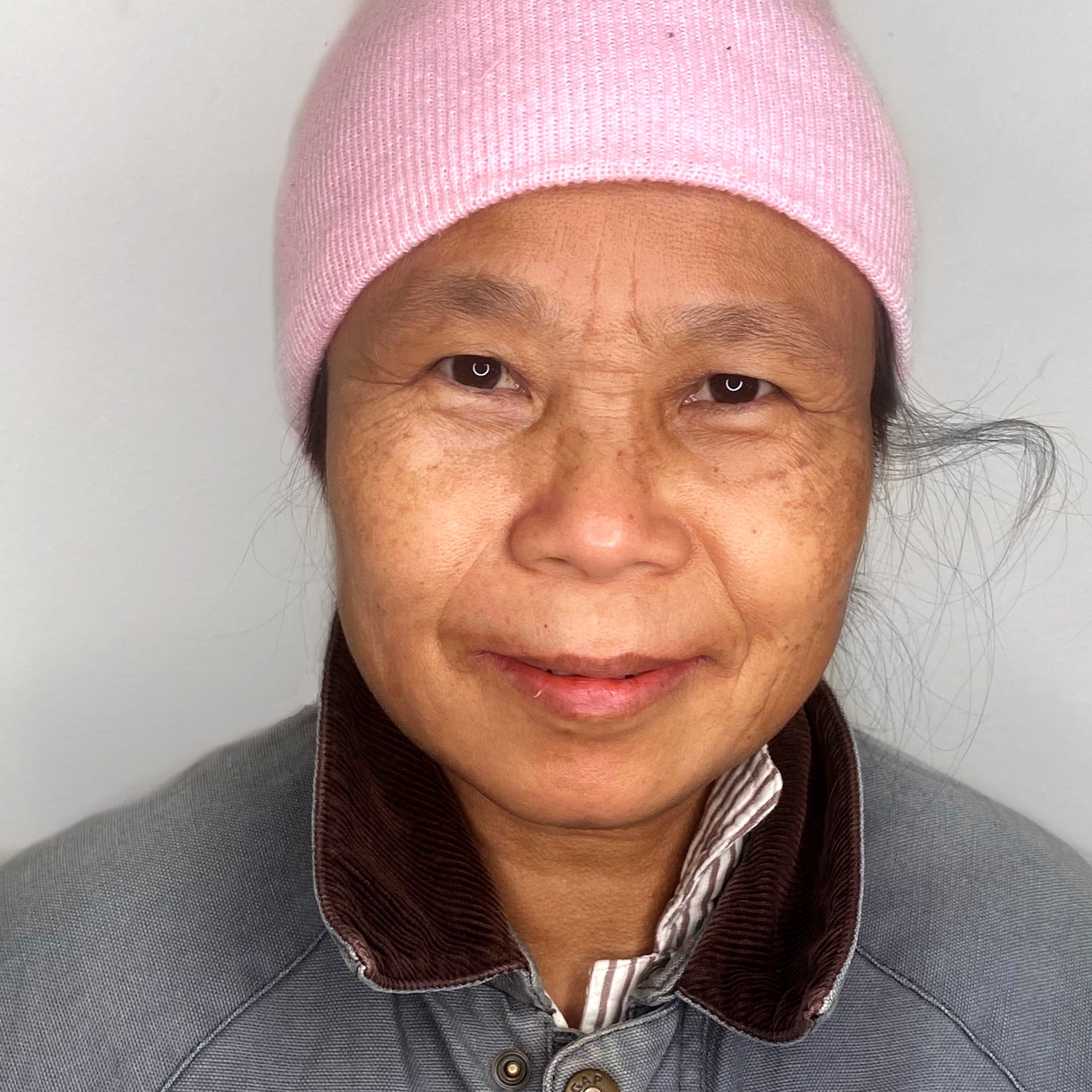
Munawara Sultana
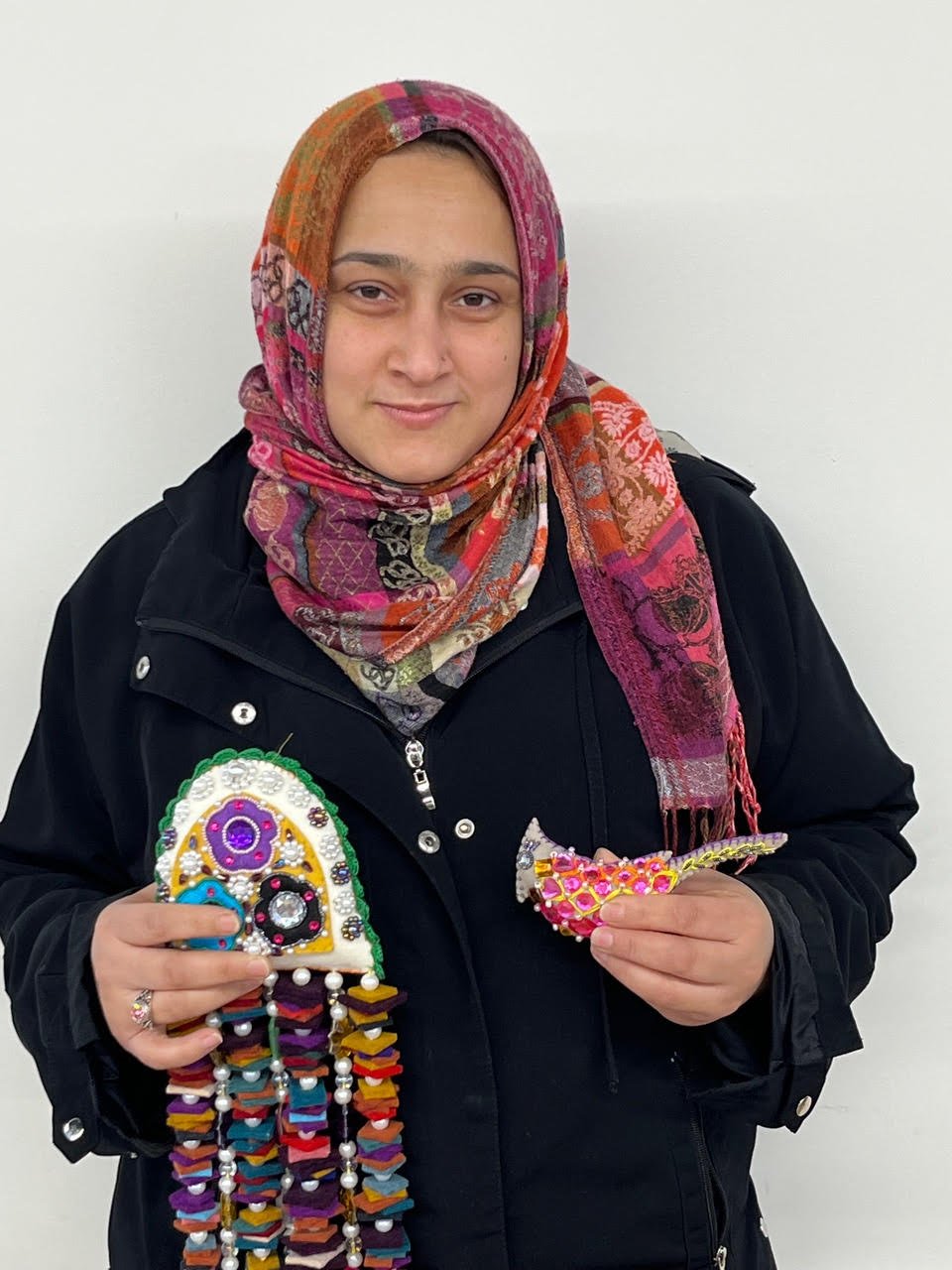
Munawara Sultana immigrated to Buffalo from Pakistan in 2021. She is a member of the Refugee Women’s Workshop at Stitch Buffalo and also sits on the organization’s Board of Directors. Despite the steep barriers to education faced by many Pakistani women, Muna was able to receive an undergraduate degree that prepared her for her career as an entrepreneur. She is currently working to rebuild the female-led artisan business she had established in Pakistan and hopes to open her own cafe that features products made by Pakistani women. Through this, she hopes to start a local conversation of the experience of women in Pakistan.
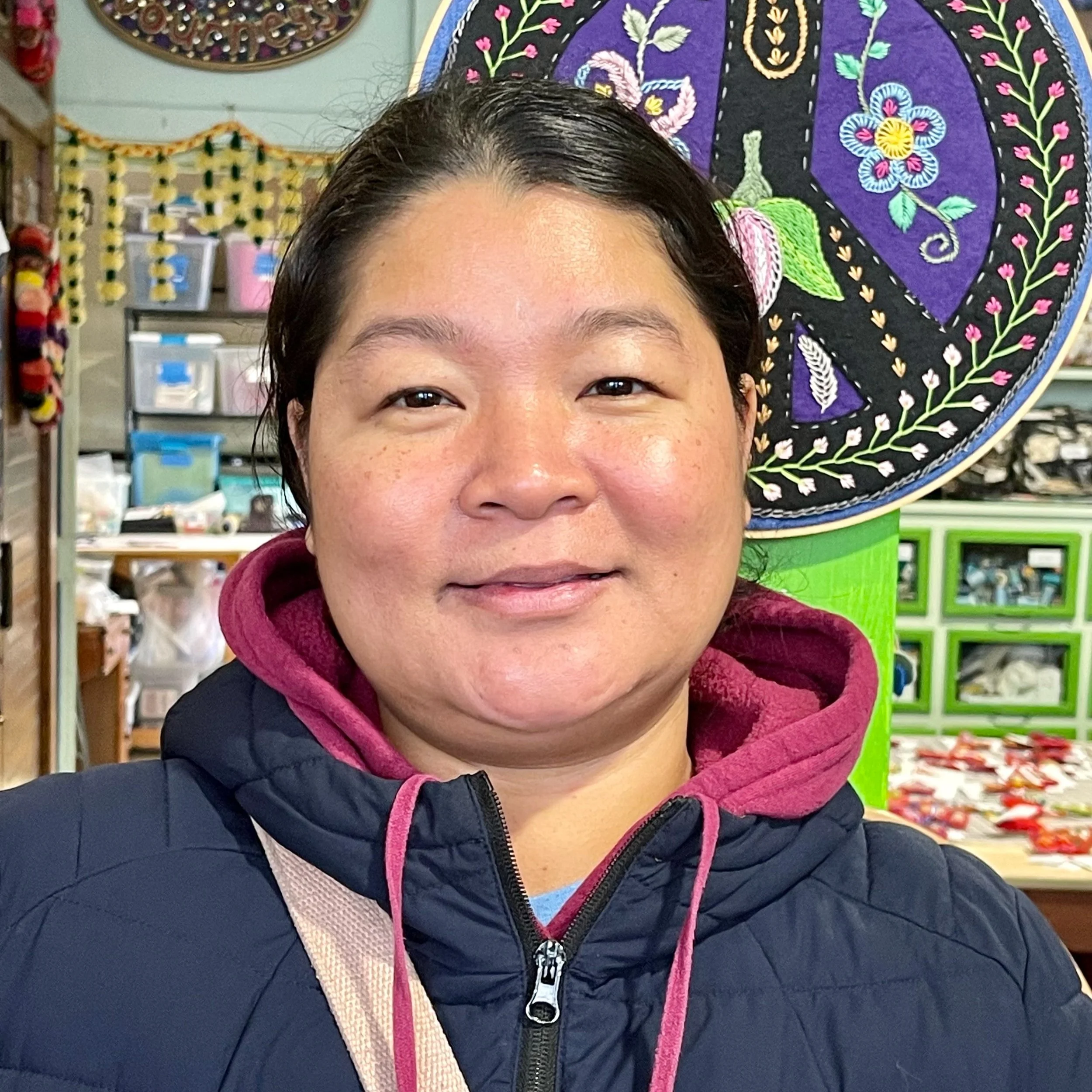
Mu Mu
Originally from Myanmar, Mu Mu and her family walked across mountains and a river to a refugee camp in Thailand. While living in the camp for ten years, she attended a training class to learn embroidery, and her work displays what a good student she was. “I do lots of embroidery. I make scarves, pins, flower necklaces, elephants, and birds. I sewed every day in my home country,” she says. “Stitch helps me make money. I can take my work home with me and take care of my daughter. When she goes to school, I want to return to the workforce.”
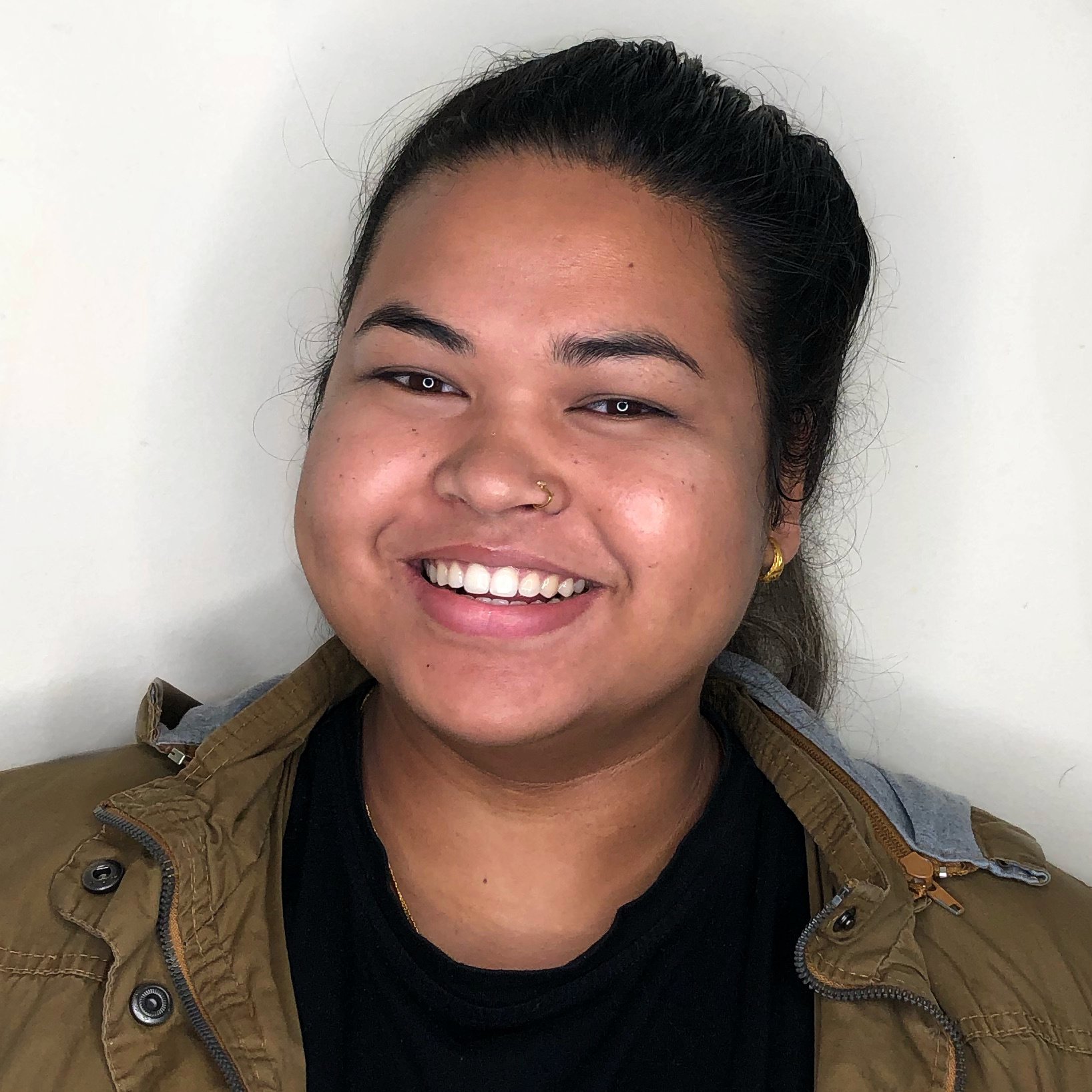
Bina Biswa
Bina Biswa left Bhutan when she was 15 years old and went to Nepal. She came to Buffalo in 2011 to join her sister and other members of her family. Bina learned to knit while she lived in Nepal—and says she really loves sparkle! She loves to do bead work and make lots of hair clips, hats, and to work on dresses. “I get very, very homesick a lot of the time,” she says. “Working on embroidery keeps my mind busy and gives me other things to think about. It really helps me.” (Photograph by Luke Copping. Interview by Holly Metz Doyle.)
Hkawng Lung
Hkawng Lung came to Buffalo from Burma, and received her first ever paycheck from Stitch Buffalo at the age of 72. “I was a refugee in Kuala Lumpur, Malaysia, until 2015 when I came to America, because it was still very unsafe there,” says Hkawng. “I am happy here in Buffalo. I can do whatever I want here. I can work and earn money, and that makes me very happy.” (Photo by Michael Mandolfo.)
Dah John
Dah John came to Buffalo more than ten years ago, but after leaving Burma she first lived in a refugee camp in Thailand for eight years. She is a long-time Stitch Buffalo artist and has become a popular instructor of our embroidery workshops. While she works on all kinds of projects, she considers embroidery on clothing to be her specialty. (Photo by Michael Mandolfo.)
Paw Eh Bu
Paw Eh Bu was born to a Karen family in rural Myanmar. To escape ethnic war, they fled to a refugee camp in Thailand. After five years in the camp, the UN resettled her family to Chicago. A year later, she and her husband moved to Buffalo to be with her sister. Here, she made friends with Mu Mu, a woman whose Karen village had been near hers in Myanmar, and who had become part of the Refugee Women’s Workshop. At Stitch Buffalo, Paw Eh Bu says she learned stitching skills, formed new friendships, earned money for her family, and found a renewed sense of her own value. What she did not learn at Stitch Buffalo—what is uniquely and beautifully her own—is a natural creativity, immense curiosity, and a problem-solving attitude. Click HERE to read more about Paw Eh Bu’s early years.
Hsar Hay Moo
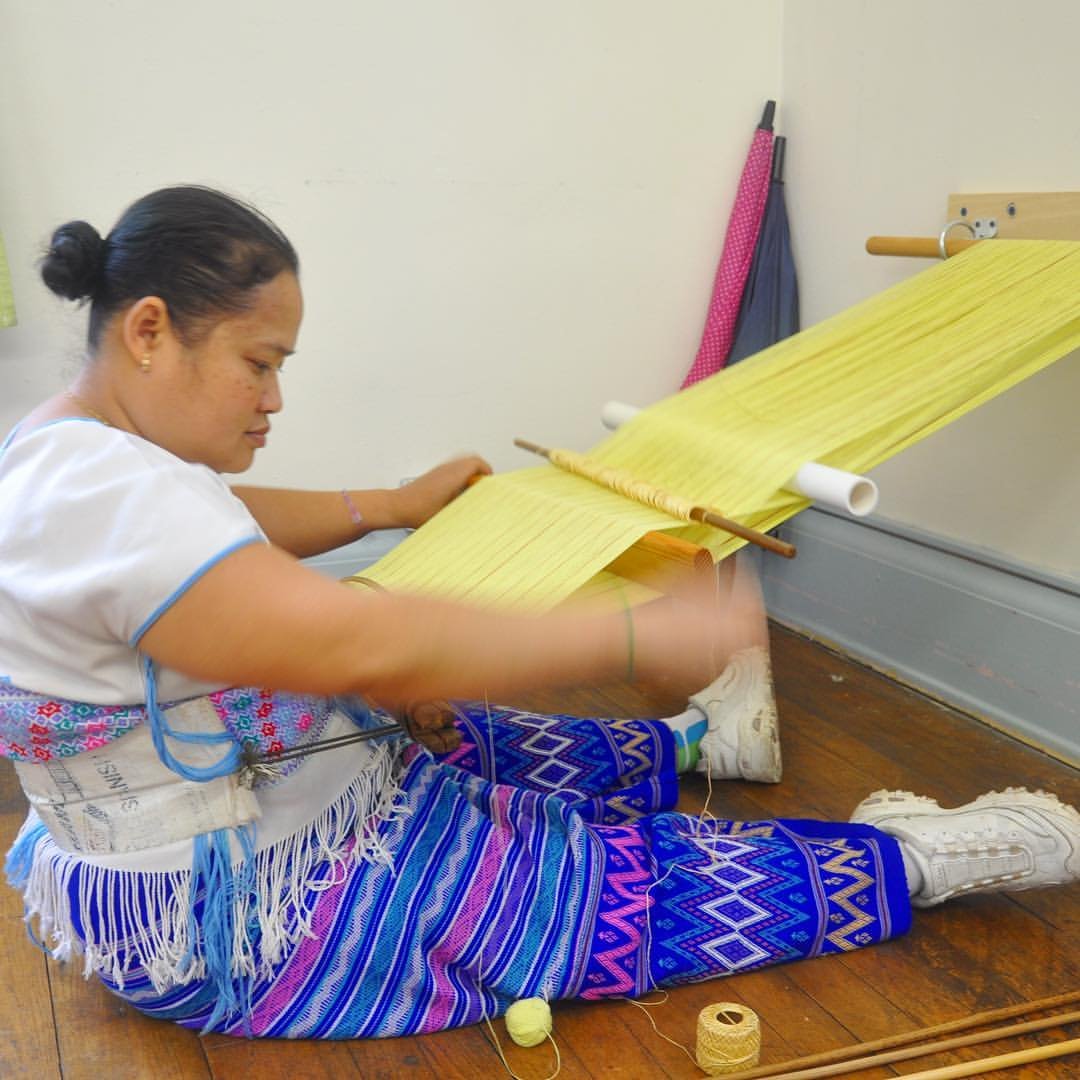
When Hsar Hay Moo joined the Stitch Buffalo community, she was creating beautiful embroidery, so we asked her, "Is there anything else you like to do?" She surprised us with her answer: she was a weaver! Because weavers are often forced to leave their looms behind when they depart refugee camps, Stitch Buffalo created a unique system to adapt traditional looms (typically used outdoors) for home use. This allowed women like Hsar to weave once again, to express their culture, and to maintain vital connections to now-fractured families.
Mandari Magar
Mandari has been a member of the Stitch Buffalo family for many years. In Bhutan, she was a farmer—rising every morning at 4am to work in the fields with her family. She lived in a refugee camp for twenty years before coming to America. Here, Stitch Buffalo has made it possible to earn money while preserving the traditions she left behind. Asked what she likes best about Buffalo, Mandari said, “Freedom and my home.”
Judith Hlei
Judith came to Buffalo from Myanmar—and she can do it all! In addition to top-notch hand-embroidery skills, she is a machine sewist who creates many of our bags and pouches. She often partners with other refugee women to turn their hand-embroidered panels into sewn products that are ready for sale.
Tila Bastola
Tila has been a member of the Stitch Buffalo since our very first meeting back in 2014. She brings a unique style to her hand embroidery, often including geometric and appliqué elements in her designs. And if you smell something tantalizing in the studio, it’s probably a batch of her delicious home-made samosas! Tila is our go-to caterer for many Stitch Buffalo events.
Tika Bhattari
Tika and her sister Saraswati were introduced to Stitch Buffalo by their friend and fellow stitcher Tila. Tika and Saraswati often visit Stitch Buffalo together when they take a break from home-schooling their children. The sisters have also become popular instructors for some of our craft classes and community workshops.
Bibi Sarwari
Bibi Sarwari came to Buffalo from Afghanistan, where she learned to sew and embroider at the age of eight.
When she was growing up, Bibi and her sisters went to school from 8:30 until noon every day. In the afternoons, the girls went home and learned to sew with their mother. Bibi mostly learned to embellish dresses and hijabs for celebrations.
Bibi Sarwari has a unique style that uses bright colors and large gem-like beads. She says, "These designs are creations of my mind.”
Ser Eh Paw
Ser Eh Paw is originally from Burma and learned many of her embroidery skills while living in a refugee camp in Thailand. She is one of our most popular embroidery teachers—and the pandemic didn't slow down her commitment to sharing her skills and culture. Working with Constantin (a filmmaker originally from Rwanda), Stitch Buffalo helped Ser develop a streaming video of her class, a kit based on her sampler design, and helped her begin teaching virtual workshops via Zoom.
Freshta Parwani
Freshta Parwani came to Buffalo in 2021 from Kabul in Afghanistan. She and her husband Ajmal have been married to for sixteen years and have five children.
Freshta learned needlework skills from her mother and sister, beginning at the age of fifteen. "In Afghanistan, I made clothing for family and friends and I was well known in my home district in Kabul for my sewing and embellishment skills," she says. "My craft skills include embroidery, beading, machine sewing, and designing with shisha mirrors."
In addition to helping support her family, needlework is helping Freshta acclimate to live in Buffalo. "Now, sewing is a relaxing practice for me as I settle into this new country. I love to share my work and creative ideas with others in my community and am inspired by traditions from my country."
Hiran Desai
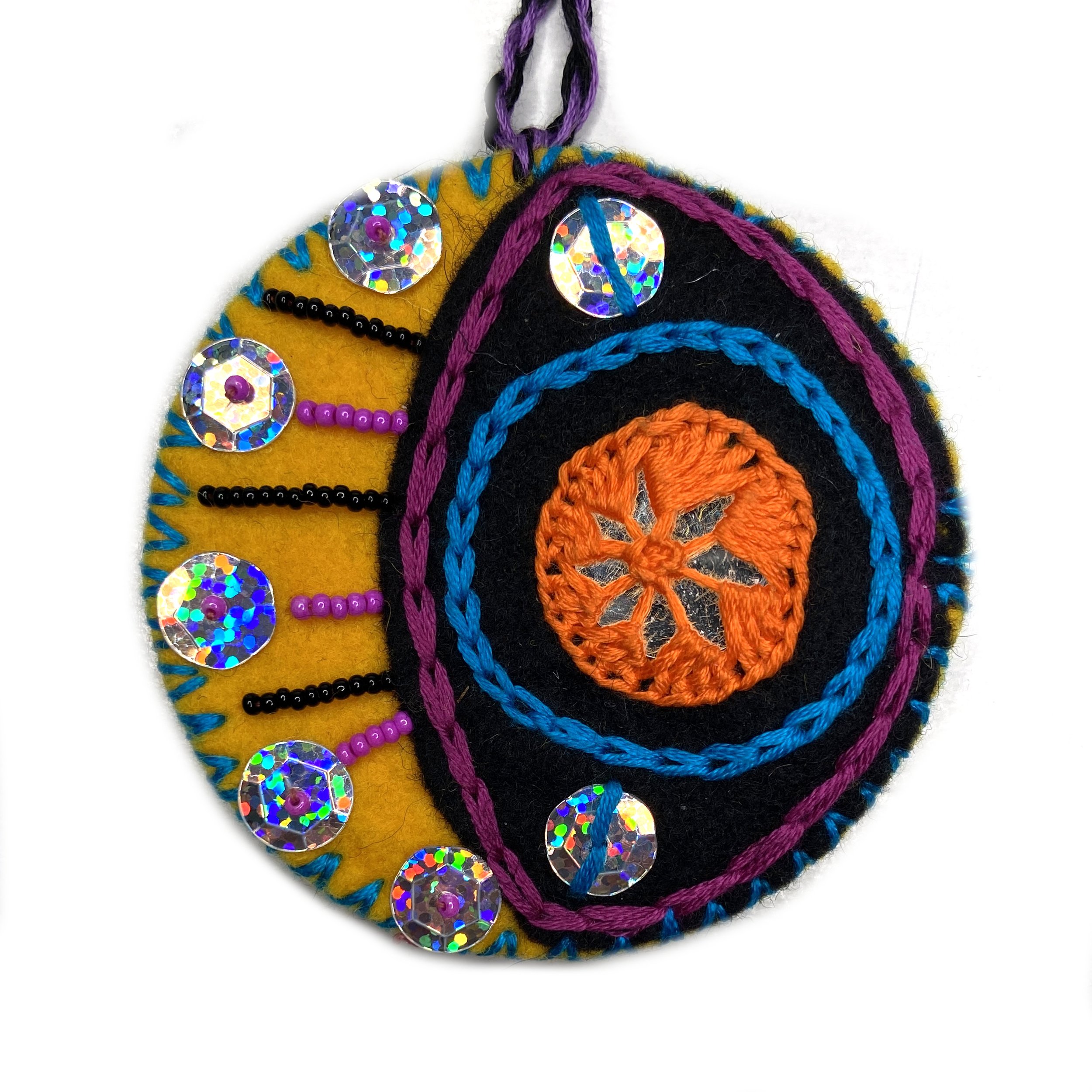
Hiran came to Buffalo from India and is a gifted hand embroidery artist. Her specialty is mirror work. Also called shisha, this is a traditional form of Indian embroidery that involves decoratively stitching tiny pieces of shiny glass to fabric.
Kaushila Biswa
Country of Origin: Bhutan
Ta Phay
Country of Origin: Burma
Yamuna Biswa
Country of origin: Bhutan
Zi Ram
Country of origin: Burma
Karma Tamang
Country of Origin: Bhutan
Dau Nan
Country of origin: Burma
Zarghona
Zargona is from Afghanistan and first came to Stitch Buffalo in late 2023 as an embroidery artist. in 2024, she decided she wanted to learn machine sewing—and she has been at the studio developing her skills almost every day, working with Munawara Sultana as her mentor. She has now added cloth napkins and other sewn products to her inventory for sale in the store.